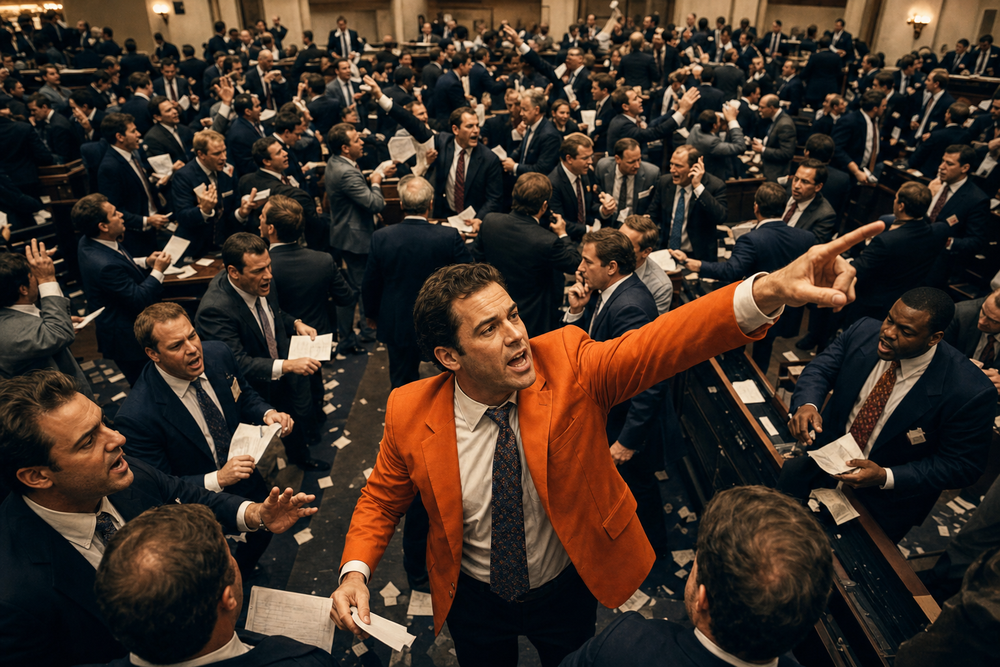
In June 2026, Kalshi and Polymarket combined to trade $44.8 billion in a single month. That's roughly 75% more than the previous month. It's roughly three times what US sportsbooks combined traded in an average month during 2025.
A category that was a niche crypto experiment three years ago is now moving more money per month than most public exchanges. Here's how the FIFA World Cup broke prediction markets into the mainstream — and what it means for what comes next.
The numbers, from the ground
Kalshi: $31.5 billion in June 2026 trading volume. Up 87.4% from May's $16.8 billion. Sports drove nearly all of it. Daily fees topped $13 million on peak trading days.
Polymarket international: $10.8 billion in June, up 45% from $7.08 billion in May. World Cup markets on Polymarket's platform crossed $4 billion in cumulative volume by early July.
Polymarket US: $3.04 billion in June, up from $1.77 billion in May. The CFTC-regulated US arm is scaling fast, though still less than a tenth of Kalshi's US volume.
Rothera (Robinhood + Susquehanna joint venture): $2 billion in its first month of operation. Went from launch to market share #3 in a single month, surpassing Crypto.com's Nadex.
The category isn't just growing. It's compressing years of adoption into single months.
The valuation story that goes with the volume
Kalshi is now valued at $22 billion after its 2026 Series F, led by TCV. That valuation reflects $850 million in fee revenue for 2026 alone, cumulative revenue of $1.15 billion since launch, and 52.6% market share as of March 2026 (higher after the World Cup surge).
Polymarket is raising at $15 billion, with a $600 million strategic investment from Intercontinental Exchange (the parent company of the New York Stock Exchange). That's not a crypto-native investor. That's the traditional US financial establishment placing a strategic bet.
Combined valuations: $37 billion for two companies that didn't exist as commercial platforms five years ago. Both companies' 2026 growth curves are almost entirely dependent on the calendar of major sports events. That concentration is worth watching — but the ambition of these valuations tells you where the smart money thinks this is going.
Why the World Cup was the catalyst
Three structural reasons the World Cup mattered specifically.
One: global audience. World Cup viewership is roughly 5 billion people globally over the course of the tournament. That's a completely different scale from any regional sport. Prediction markets never had a moment with that much attention before.
Two: recurring event structure. 64 matches over a month. Each match has multiple sub-markets (winner, total goals, first goal scorer, etc.). Traders could stay engaged for the entire tournament with fresh contracts every day. Sportsbooks have known this for decades — prediction markets just discovered it.
Three: mainstream advertising legitimacy. Kalshi spent an estimated $32 million on national TV advertising in 2026, with 40% of that on live World Cup broadcasts. Polymarket ran 45 ads during the same games. This normalized prediction markets in living rooms in a way no crypto product had achieved before.
The single most extreme trade of the tournament
On July 5, 2026, England beat Mexico 3-2 in a wild round-of-16 match. Kalshi recorded $223 million in single-market betting volume on the "which team advances" question. That is the highest volume on a single sports result in the history of prediction markets.
In-game trading was extreme. When Mexico led early, Mexico's odds jumped to 78% on Kalshi. When England equalized, the market flipped. When England won, the reversal was one of the largest single-day P&L swings in the industry's short history.
Retail users, per Kalshi's own post-mortem analysis, took heavy losses on the match. The affiliate-driven marketing had brought in a wave of first-time users, many of whom traded based on national loyalty rather than market analysis. This is going to be a recurring theme.
The competitive landscape shift
Rothera didn't exist as a prediction market platform in April. By June it was #3 in US market share by notional volume. That's the fastest ramp any prediction market has achieved — faster than Kalshi's initial launch, faster than Polymarket's US entry.
The reason: Rothera operates as a Kalshi-clearing exchange with Susquehanna's market making and Robinhood's distribution. It's not innovating on the product — it's aggregating existing infrastructure with the largest US retail brokerage's customer funnel. Robinhood has 30+ million active users. Even a 3% conversion to prediction markets creates a top-3 platform overnight.
Behind Rothera, Nadex (Crypto.com) sits at 2.4% market share. Everyone else is under 1%. The concentration at the top is real, but the second-tier space is still forming.
What the money is telling us about the future
Three predictions the volume data supports.
Prediction markets are on track for roughly $240 billion in annual volume by end of 2026 if current trends continue. That would put the category above most US futures categories and rivaling major equity ETFs.
Sports will keep dominating for at least 24 months. There's no natural ceiling — global sports events run continuously (World Cup, NFL, NBA, cricket, esports). Kalshi has explicitly positioned as the go-to sports event contract exchange.
Politics will re-emerge as a growth vector in Q4 2026 through Q1 2027. The US midterms alone have already drawn $197 million in trading volume across 1,408 midterm markets. That's before campaigns really intensify. By election day, midterm markets could rival World Cup volumes.
What Thai users should specifically know
Neither Kalshi nor Polymarket's international platform is accessible to Thai users legally. Polymarket US requires US residency. Kalshi requires SSN and US bank account. Rothera requires a Robinhood US account.
Thai citizens are watching $44.8 billion trade every month on questions they cannot participate in. The platforms are structurally excluded from the Thai audience by regulatory and jurisdictional design.
This is a huge market failure. The demand exists — Thai crypto users routinely try to VPN into Polymarket, use offshore alternatives, or trade underground peer-to-peer. The supply of locally compliant infrastructure doesn't exist.
Where Juno fits into this landscape
Juno isn't trying to compete with Kalshi on NFL prop markets or with Polymarket on US presidential elections. Those markets are won.
Where Juno competes: Asian retail users who cannot legally access global platforms, Thai and regional event questions the global platforms don't list, baht and other local currency denominations, and locally-verifiable resolution sources.
The prediction market category is $44.8 billion per month and growing 75% per month. Even 1% of the Asian slice of that becomes a meaningful business. The market has clearly proven the demand. The task now is building the supply for audiences the global leaders can't serve.
The $44.8 billion lesson
Three years ago, the biggest prediction markets question was "will this category exist as a real business." That question is settled. $44.8 billion in a single month is settled. $37 billion in combined valuations is settled. NYSE's parent writing $600 million checks is settled.
The remaining questions are all about distribution, regulation, and who serves the audiences the leaders can't. Those are the questions that will define the next five years.
If you weren't paying attention to prediction markets before the World Cup, you probably still don't understand what just happened. This is the moment the category graduated. Everything from here is figuring out who owns the graduating class.